
What is rPET Plastic? A Complete Guide for Food Packaging
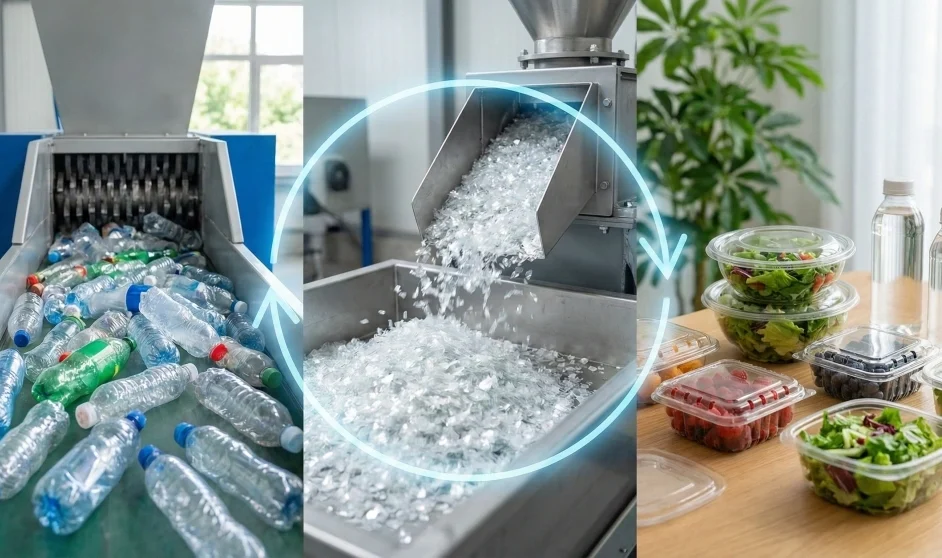
Recycled Polyethylene Terephthalate, commonly known as rPET, is a high-grade plastic material produced by collecting, cleaning, and reprocessing post-consumer PET waste into new packaging solutions. This material serves as a sustainable alternative to virgin plastic, allowing manufacturers to create a closed-loop system that reduces environmental impact while maintaining the safety standards required for food contact. […]
What Is a Closed-Loop Recycling System in Plastic Packaging?
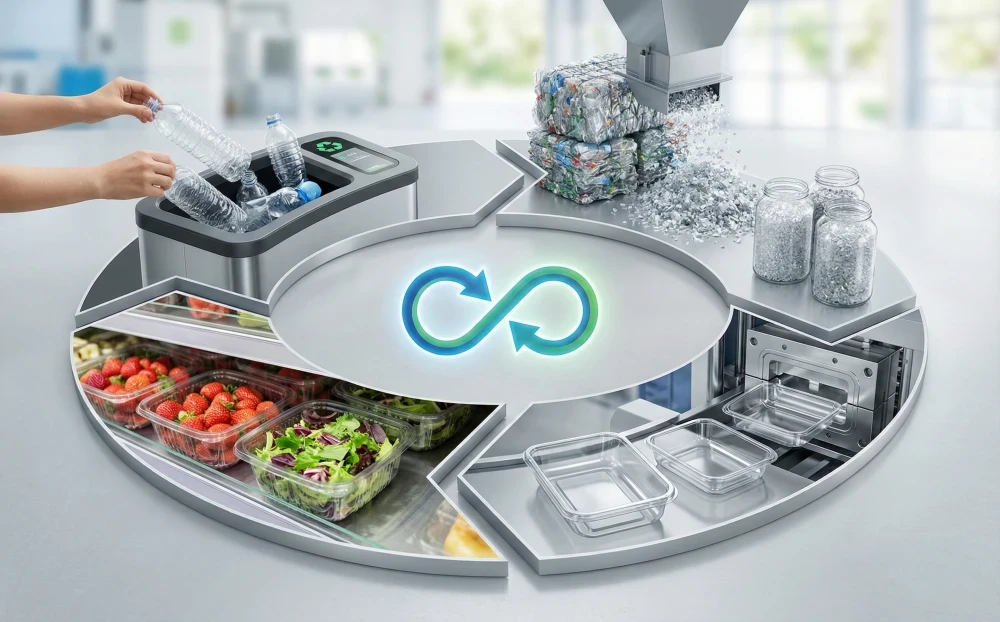
A closed-loop system in plastic packaging refers to a circular supply chain where post-consumer materials are collected, recycled, and manufactured back into their original product form without losing material quality. In the context of food-grade plastics, this means a PET bottle is recycled specifically to become another PET bottle or food tray, indefinitely diverting waste […]
How Post-Consumer PET Is Collected for rPET Production?
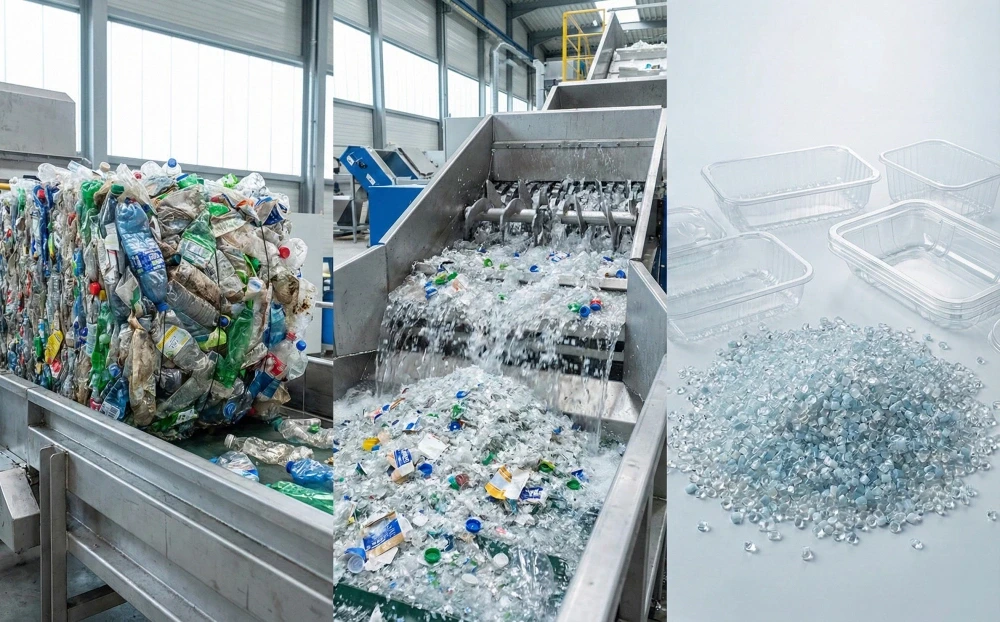
Post-consumer PET waste refers to Polyethylene Terephthalate plastic products, primarily beverage bottles and food containers, that have been used by end-consumers and discarded into the recycling stream. This waste serves as the critical feedstock for sustainable packaging, undergoing complex recovery and purification stages to be transformed back into high-quality resin suitable for the food industry. […]
What to Know About rPET Food Trays & Containers?
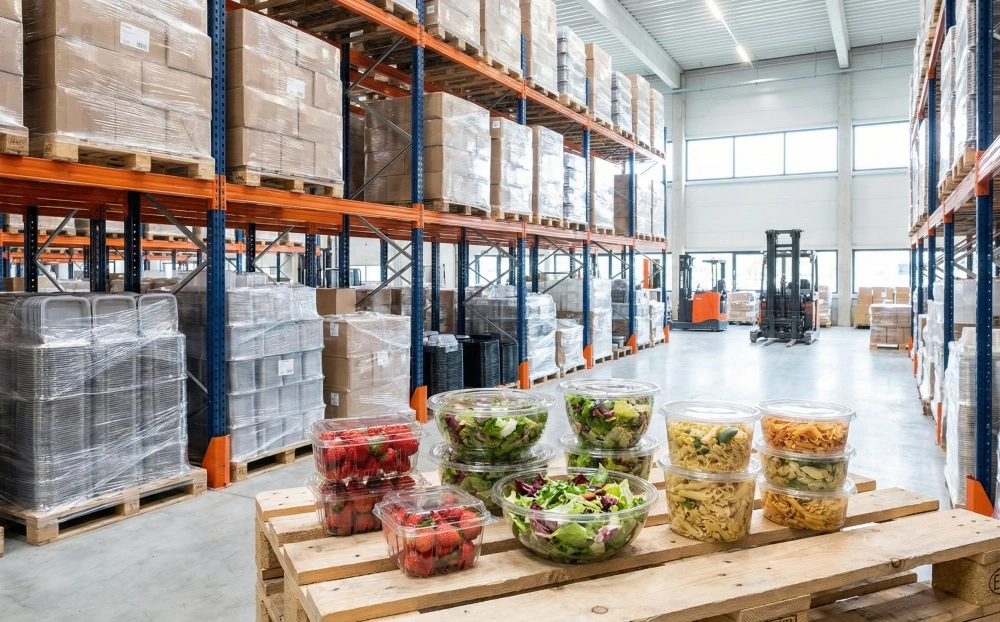
rPET food packaging refers to a wide range of trays, bowls, and containers manufactured using decontaminated, food-grade recycled Polyethylene Terephthalate resin that meets FDA and EU safety standards. These products provide the same high-clarity and structural protection as virgin plastics but with a significantly smaller environmental footprint, making them the preferred choice for bulk food […]
rPET Packaging Costs: Why It Costs More Than PET?
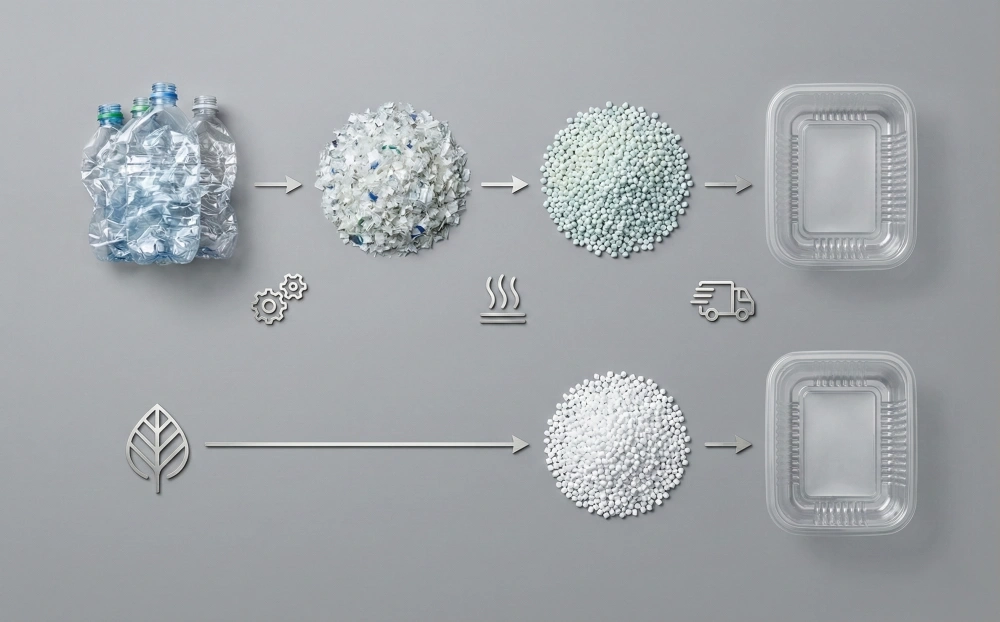
rPET packaging costs more than virgin PET because the process of transforming post-consumer waste into food-grade resin requires a specialized infrastructure for collection, automated sorting, and molecular decontamination that virgin plastic production bypasses. While virgin PET relies on streamlined, large-scale petrochemical extraction, recycled materials must navigate a fragmented and labor-intensive supply chain to ensure safety […]
What Are the Differences Between PET and rPET Packaging?
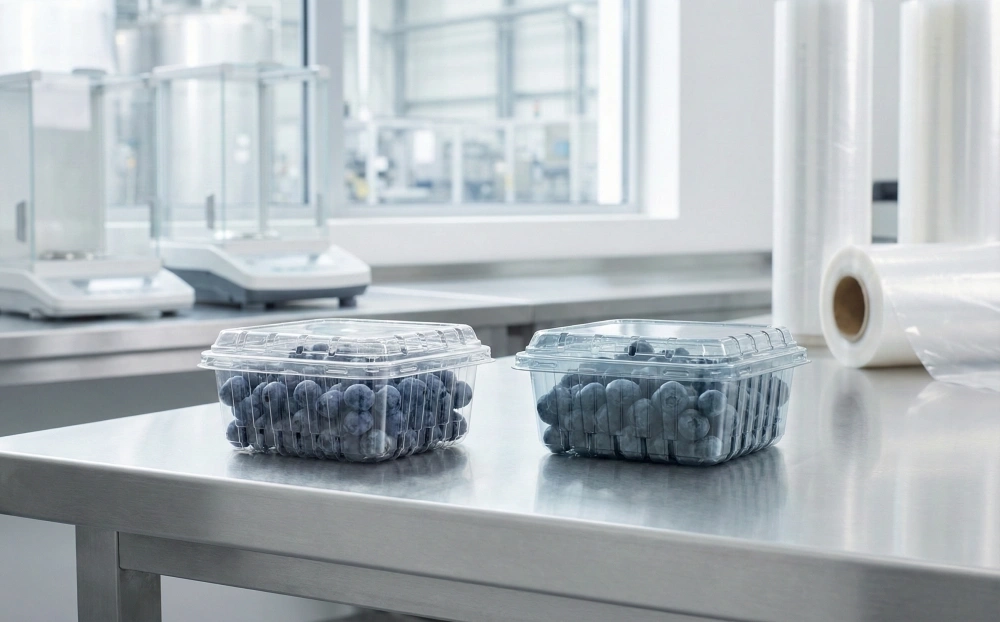
The primary difference between PET and rPET packaging lies in their origin: virgin PET is synthesized from petrochemical feedstocks (oil and gas), while rPET packaging is manufactured from post-consumer recycled plastic waste that has been processed and decontaminated. While both materials offer identical structural benefits, rPET significantly reduces carbon emissions and helps businesses comply with […]
Is rPET 100% Recycled? Content Levels and Certification
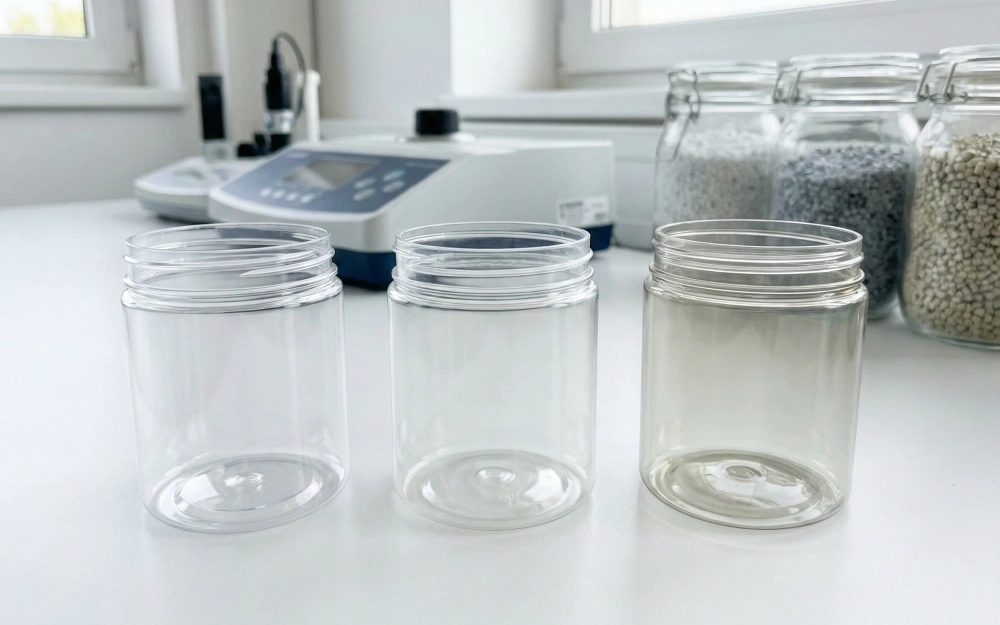
rPET packaging consists of plastic containers or films that incorporate post-consumer recycled material, though the actual percentage of recycled content can vary from 30% to 100% depending on technical and economic factors. While “100% recycled” is the industrial gold standard, many food-grade applications utilize blended resins to balance structural integrity with environmental goals. Procurement managers […]
What Is rPET in Packaging? Definition, Process & Use Cases

rPET packaging refers to food-grade containers, bottles, and trays manufactured from Recycled Polyethylene Terephthalate, a high-performance polymer derived from post-consumer plastic waste. This sustainable material undergoes rigorous decontamination to ensure it meets the safety standards required for direct contact with food and beverages. Procurement officers and global distributors often struggle to meet strict environmental mandates […]