
An air tight container is a specialized packaging vessel engineered to create a hermetic seal that prevents the exchange of gases and moisture between the interior and the external environment. These containers utilize advanced sealing mechanisms, such as silicone gaskets or precision-molded friction fits, to preserve product freshness and extend shelf life by inhibiting oxidation and microbial growth.
As a procurement manager or food distributor, you likely face the constant pressure of maintaining product integrity during long-distance shipping and storage. Inconsistent sealing leads to premature spoilage, loss of crispness, and compromised safety standards, which directly impacts your bottom line and brand reputation. This comprehensive guide provides the technical insights and material comparisons necessary to streamline your sourcing process and ensure your food packaging meets the highest industrial standards.
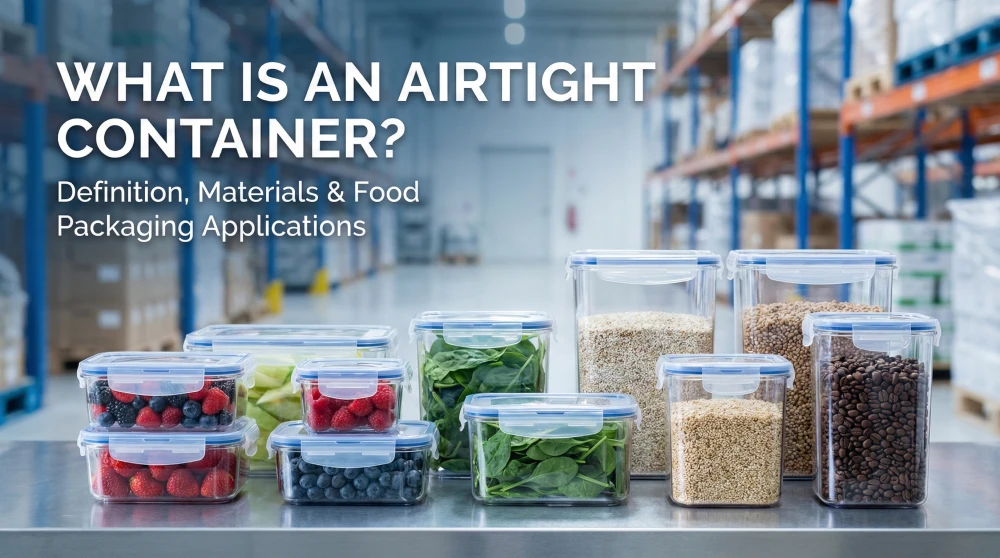
Why Does an Air Tight Container Matter for Food Preservation?
An air tight container serves as the primary defense against environmental factors that accelerate food degradation, specifically oxygen and humidity. By maintaining a stable internal atmosphere, these containers prevent the staling of dry goods and the wilting of fresh produce.
Here’s the deal. While many people think any lid provides a seal, true airtightness requires a specific level of pressure resistance.
The Science of Gas Exchange
The primary function of a high-quality seal is to block oxygen from entering the vessel. Oxygen is the main catalyst for oxidation, which turns fats rancid and causes color changes in fruits and vegetables.
- Prevents aerobic bacteria from multiplying rapidly
- Stops moisture from entering dry products like crackers or nuts
- Retains the natural aroma and flavor profiles of processed foods
Impact on Shelf Life
Extended shelf life is a direct result of atmospheric control. When you choose the right air tight container, you are effectively buying time for your supply chain.
- Increases the sell-by window for retail products
- Reduces waste in food processing facilities
- Minimizes the need for chemical preservatives
| Feature | Airtight Packaging | Standard Packaging |
| Oxygen Permeability | Near Zero | High |
| Moisture Retention | Excellent | Poor |
| Shelf Life Extension | 50-200% Increase | Baseline |
| Contamination Risk | Minimal | Moderate |
The difference between a standard lid and an airtight seal determines whether your product arrives at the consumer’s table in peak condition or as a costly return.
Key Takeaway: Airtight packaging is a strategic investment in product longevity and food safety that reduces long-term costs associated with spoilage.
What Are the Differences Between Airtight and Non-Airtight Plastic Containers?
Understanding the technical distinctions between these three categories is essential for optimizing your packaging budget and ensuring food safety. While non-airtight containers are suitable for short-term transport, an air tight container is required for any product intended for a prolonged shelf presence.
Defining the Barrier Properties
A common industry misconception is that a leak-proof container is automatically airtight. However, these terms describe different physical barriers:
- Non-Airtight: Features simple snap-on lids focusing on dust protection. Minute gaps allow for gas exchange, making them suitable only for same-day consumption like deli salads.
- Leak-Proof: Engineered to prevent the passage of liquids by utilizing surface tension and physical barriers. A container can hold water without leaking but still allow oxygen molecules—which are significantly smaller than liquid molecules—to pass through.
- Airtight: Engineered with tighter tolerances and molecular-level barriers (often gaskets) to block oxygen and moisture vapor. This maintenance of a vacuum or stable internal atmosphere is what prevents oxidation.
Design and Typical Use Cases
Choosing the correct vessel depends on your specific distribution cycle and the physical state of your food product.
- Use Leak-Proof for: Liquid-heavy items like soups or sauces where preventing spills is the primary priority.
- Use Airtight for: Dry goods (crackers, nuts), powders, and dehydrated snacks that must remain crisp.
- Use Combination (Airtight + Leak-Proof): For marinated meats or fresh-cut fruits to keep juices in while preventing oxygen-induced browning.
| Criteria | Airtight Container | Leak-Proof Container | Non-Airtight Container |
| Primary Barrier | Gases (Oxygen/CO2) | Liquids (Water/Oils) | External Dust/Debris |
| Seal Mechanism | Gasket / Interference Fit | Physical Tension Barrier | Loose Snap-on |
| Storage Duration | Long-term (Weeks/Months) | Variable | Short-term (Hours/Days) |
| Best For | Coffee, Grains, Snacks | Soups, Sauces | Daily Deli Items |
Identifying the necessary level of protection prevents over-engineering your packaging while ensuring food safety is never compromised.
Key Takeaway: B2B buyers must specify if they need gas-phase protection, liquid-phase retention, or both to obtain the most cost-effective packaging solution.
What Makes a Container Airtight? Sealing Methods in Food Packaging
The effectiveness of an air tight container is determined by its sealing architecture. In industrial manufacturing, we utilize several methods to achieve a hermetic environment, ranging from mechanical locks to specialized materials.
Mechanical Locking Systems
These are the most common for reusable or high-end wholesale containers. They use physical force to compress a seal.
- Four-hinge locking lids provide even pressure across all sides
- Twist-lock mechanisms utilize threads to create a vertical compression force
- Snap-lock systems are preferred for high-volume production due to ease of assembly
Gasket Technology
The gasket is often the “secret sauce” of a professional-grade air tight container.
- Silicone gaskets offer the best durability and heat resistance
- TPE (Thermoplastic Elastomer) gaskets are often over-molded directly onto the lid
- Hollow-core gaskets provide more “give” for a better seal even if the plastic warps slightly
Induction and Heat Sealing
For disposable or factory-sealed containers, induction sealing provides a tamper-evident airtight barrier.
- Foil liners are bonded to the rim using electromagnetic induction
- Provides a 100% oxygen barrier until the consumer opens the product
- Ideal for long-term storage of sauces, powders, and oils
| Sealing Method | Durability | Best For |
| Silicone Gasket | Very High | Reusable Wholesale Totes |
| Over-molded TPE | High | Industrial Food Containers |
| Heat Seal Foil | Single-use | Retail Food Packaging |
The right sealing method balances the need for a perfect barrier with the convenience required by the end-user.
Key Takeaway: Understanding the mechanics of the seal allows you to troubleshoot potential failures in your packaging chain before they occur.
Best Materials for Airtight Food Containers: PP vs PET vs Aluminum
Material selection is the foundation of any air tight container. The chemical composition of the tray or cup determines its gas transmission rate and its compatibility with various food types and temperatures.
Polypropylene (PP)
PP is the workhorse of the food packaging industry, especially for Reliancepak’s core lines.
- High melting point makes it suitable for hot-fill and microwave use
- Excellent chemical resistance against oils and acids
- Slightly higher gas permeability than PET, but excellent when paired with the right lid
Polyethylene Terephthalate (PET)
PET is known for its crystal-clear transparency and superior gas barrier properties.
- Offers a “glass-like” look that is vital for retail shelf appeal
- Extremely low oxygen transmission rate (OTR)
- Best for cold or room-temperature applications as it can deform under high heat
Aluminum and Hybrid Materials
For extreme shelf life or high-heat processing like retort, aluminum remains a top choice.
- Absolute barrier to light, oxygen, and moisture
- Fully recyclable and perceived as a premium material
- Often used for lidding or specialized trays in airline catering and meal prep
| Material | Heat Resistance | Clarity | Barrier Level |
| PP | High | Translucent | Moderate |
| PET | Low | Excellent | High |
| Aluminum | Very High | Opaque | Absolute |
Choosing the right material involves balancing aesthetic requirements with the physical demands of your product’s lifecycle.
Key Takeaway: Material science dictates the success of your airtight strategy; always match the plastic type to your storage temperature and barrier needs.
How to Choose Airtight Containers for Wholesale Food Packaging
Selecting an air tight container at a wholesale scale involves more than just looking at technical specs. You must consider logistical efficiency, certification compliance, and the reliability of your manufacturing partner.
Assessing Certification and Compliance
For international trade, your packaging must meet strict food-grade standards.
- Ensure the supplier holds EU and FDA certifications
- Verify that materials are BPA-free and safe for the intended temperature range
- Request laboratory test reports for migration and airtightness performance
Evaluating Logistics and Storage
Wholesale buyers must think about how the containers behave in a warehouse and during shipping.
- Stackability is vital to maximize pallet space and reduce shipping costs
- Nesting capabilities help save space when containers are empty
- Durability under compression ensures the bottom containers don’t crack under the weight of a full pallet
Customization and Branding
Your packaging is a marketing tool. A professional air tight container should be customizable to reflect your brand identity.
- Look for suppliers offering IML (In-Mold Labeling) for permanent, high-quality branding
- Consider custom colors to differentiate your product line on the shelf
- Opt for one-stop procurement to ensure lids and bases match perfectly in color and fit
| Selection Factor | Priority for Distributors | Priority for Food Plants |
| Price per Unit | High | Moderate |
| Certification | Essential | Essential |
| Stackability | High | High |
| Specialized Sizes | Moderate | High |
A strategic partnership with a factory-integrated trader like Reliancepak ensures you get the benefits of both manufacturing precision and global logistics expertise.
Key Takeaway: Wholesale success depends on a balance of unit cost, logistical efficiency, and unwavering quality compliance.
Sourcing the Perfect Air Tight Container for Your Business
Finding the right air tight container requires a partner who understands the nuance between a standard plastic box and a high-performance food preservation system. Whether you are a large-scale distributor in Spain or a food processing plant in Malaysia, your packaging is the silent guardian of your product quality. Reliancepak provides the integrated manufacturing and trading expertise needed to deliver 9 production lines of food-grade, certified, and customizable solutions.
We invite you to consult with our technical team to discuss your specific barrier requirements and request free samples to verify our sealing performance firsthand.
Reliancepak aims to be the global benchmark for reliability and innovation in the food packaging industry, ensuring every meal stays as fresh as the moment it was packed.
FAQ
Can I microwave an air tight container?
Yes, provided the container is made of Polypropylene (PP) and the lid is either removed or unlatched. While PP is heat-resistant, an airtight seal can cause pressure buildup during heating, which may damage the container or cause safety issues.
How do I test if a container is truly airtight?
The most effective field test is the “submersion test.” Seal the empty container and submerge it in water; if no bubbles escape from the seal, it is airtight. For more scientific results, manufacturers use vacuum chamber testing to measure the Oxygen Transmission Rate (OTR).
Is PET or PP better for frozen food storage?
PP is generally better for frozen applications because it remains more flexible at low temperatures. PET can become brittle when frozen, increasing the risk of cracking during transport or handling.
How long do silicone gaskets last in a wholesale environment?
High-quality silicone gaskets are designed for hundreds of cycles. In a B2B context, if the container is used for single-use distribution, the gasket will easily outlast the food’s shelf life. For reusable applications, they typically last 2-3 years under normal washing conditions.
Does an air tight container prevent freezer burn?
Yes. Freezer burn is caused by sublimation (water vapor leaving the food and entering the dry freezer air). An airtight seal creates a moisture barrier that keeps the hydration within the food, significantly reducing freezer burn.